
- Describe the concepts of functional anatomy, biomechanics, and exercise physiology and be able to apply them to relatively healthy individuals.
- Apply the principles of nutrition (including diet and exercise) to managing body composition and weight control.
- Assess health status, conduct and interpret fitness testing, and prescribe and administer exercise programs for relatively healthy individuals.
- Demonstrate the ability to research, synthesize, analyze, and critically evaluate research knowledge and data.
- Develop an awareness of and concern for ethics and professionalism within the discipline of exercise science.
Courses
Below are the course requirements for the Exercise Science Major:
This does not replace official academic requirements in the university catalog. Enrolled students will work with their faculty advisor to ensure they meet all the requirements of their major.
Required:
- ESS 101: Emergency Care
- ESS 102: Foundations in Exercise Science
- ESS 212: Group Fitness Leadership
- ESS 306: Nutrition
- ESS 307: Nutrition II
- ESS 311: Exercise Testing and Prescription
- ESS 312: Exercise for Special Populations
- ESS 313: Measurement and Evaluation in Health and Physical Education
- ESS 391: Professional Practice in Exercise Science
- ESS 350: Practicum
- ESS 491: Capstone in Exercise Science
- ATR 389: Principles of Strength & Conditioning
- HSC 477: Kinesiology and Biomechanics of Exercise
- HSC 487: Exercise Physiology
- MTH 119: Statistics
- Either BIO 121 & 122: Intro to Human Anatomy I & II OR BIO 363 & 364: Human Anatomy and Physiology I & II
- ATR 213: Anatomy for Orthopedic Assessment
- HSC 150: Medical Terminology
Recommended Electives:
- ESS 240: Community Health
- ESS 317: Early Movement Experiences
- PSY 212: Sport Psychology
For a more detailed academic schedule, or to ask questions about any of our majors, contact the Admission Office at admission [at] heidelberg.edu or (419) 448-2330.
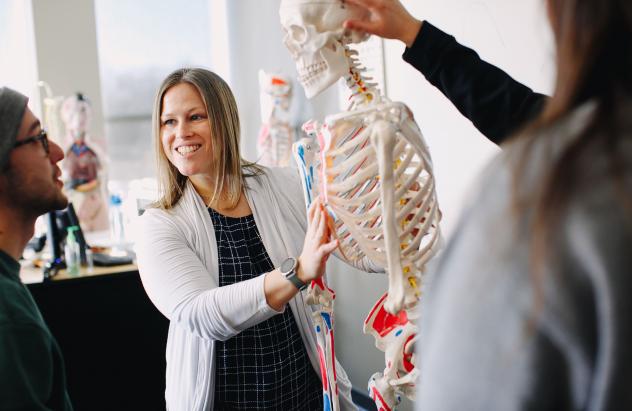
There are many exciting careers you can pursue with a degree in exercise science including exercise physiologist, strength and conditioning coach, wellness coordinator, personal trainer, and athletic coach. It's also a great foundation for pursuing Pre-Professional graduate work for:
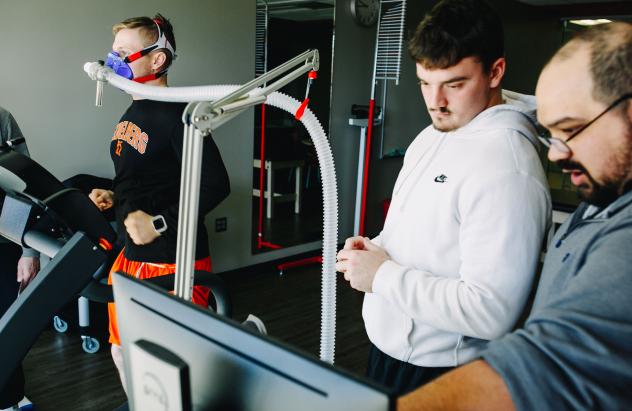
In our exercise science lab, you'll have opportunities to conduct hands-on research with athletes and teams. You will learn to design and implement testing for topics such as maximal aerobic function, electrocardiogram, metabolic analysis, resting energy expenditure, body composition, strength, power, speed, and agility. Our equipment includes a metabolic cart, treadmill, cycle ergometers, heart rate monitors, and handheld dynamometer.
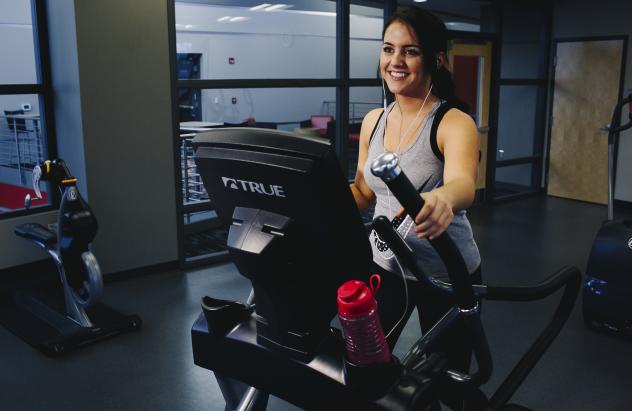

I chose Heidelberg for the connectivity and opportunities that this University had to offer. With small student to faculty ratios, great exercise science professors, equipment and countless experiences that have allowed me to progress further and faster than my peers at adjacent universities. I was able to learn in an environment that was focused on connectivity and helped me enter my masters program with all the tools I would need to be successful.
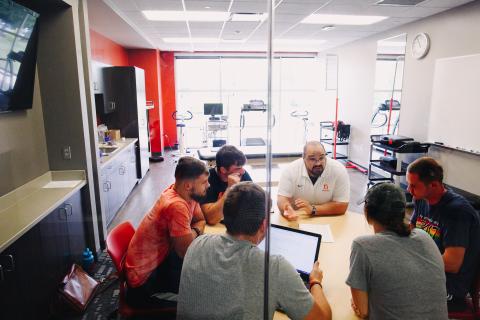
One of the best parts of Heidelberg is getting to know and working with your professors. You'll be supported and challenged as you develop skills and experiences centered around research you're interested in.